
Three San Diego skateboard legends lead panel: “Building community through skateboarding: coaching, advocacy, and design”
San Diego State University hosts a discussion on how grassroots efforts bring people together for the good.
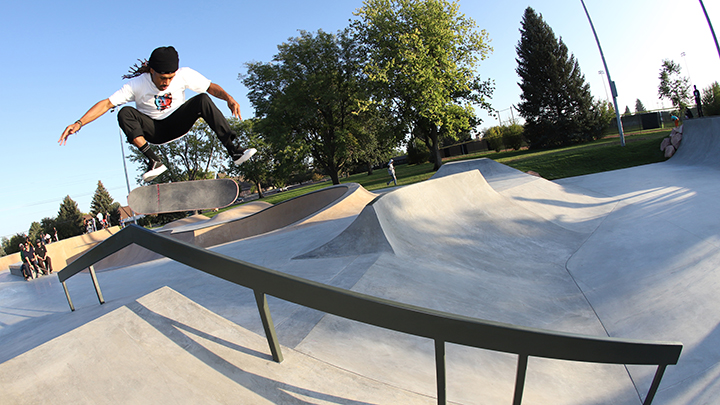
Local lore places the invention of the skateboard in San Diego’s La Jolla neighborhood around 1947. Since then, San Diego has become a global skateboarding capital where Olympic skaters train, where name brands are born and where pro skaters come to make their bones.
But for decades, as a dangerous “conveyance,” skateboarding was banned at San Diego State University. Violating skaters were chased, fined and kicked off campus. Skateboarding was singled out as more dangerous than all of the other sports hosted on school grounds likely due to its outsider culture and a rap for rule breaking.
This began to change in 2015 when student advocacy pushed for a more open policy, allowing urethane wheels to cruise campus bike paths legally. The following decade saw skateboard-themed curricula, academic research, and international conferences with skateboard academics.
“It is impressive — especially in a time of polarization — that skateboarding represents communities coming together to enhance health, child development and civic unity,” Kimball Taylor, lecturer in rhetoric and writing said.
Taylor teaches The Rhetoric of Board Sports (RWS 360) and he, alongside the SDSU Surf/Skate Studies Collaborative are hosting “Building community through skateboarding: coaching, advocacy, and design” — a panel discussion that takes place on Thursday, Feb. 12 at 11 a.m. in the SDSU Library, Leon Williams Room (LL 430/431).
Invited panelists are making a difference in the San Diego community.
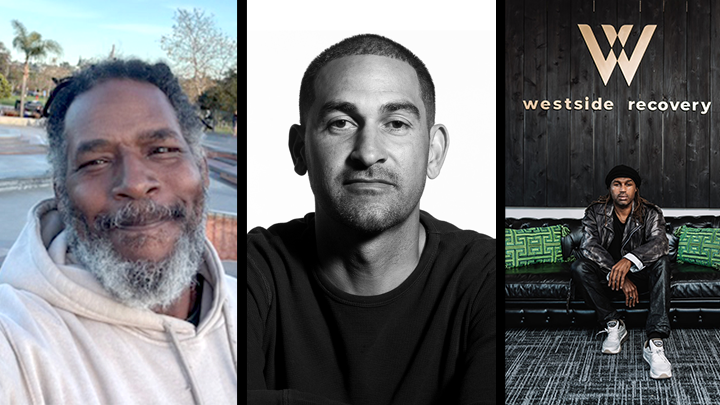
Patrick Simpson, is a skateboarding coach to local students (and some Olympic athletes) through the City’s SD Skatelife. A San Diego native, he has more than 20 years of experience in community building throughout San Diego neighborhoods.
Simpson coaches at San Diego recreation centers, from Oceanside to San Ysidro, that provide programming and skate camps to children in these communities. He teaches 150 kids per week and 20-30 homeschool students. In the summer there are more than 1,000 kids attending summer camps through the recreation centers across San Diego.
“I just love skateboarding,” Simpson said. “I love seeing people challenge themselves. It builds self-confidence. I like showing kids how they can face their own fear and grow from it.” Simpson teaches kids to set balance and stance and later drop into concrete bowls and overcome fear using technique and composure.
San Diego is known as an Olympics training ground for skateboarders. Simpson sees students, with whom he has coached as youngsters, move toward gaining sponsorships and traveling the world. Recently, he trained two kids (one is 13-years-old and the other is 11-years-old) who have qualified for the World Skate League (an international competitive league and governing body for the Olympics). In two months these San Diego skaters will fly to Spain to compete.
“There are more pro skaters living in North County than anywhere in the world,” Simpson said. In fact, Olympians Bryce Wettstein, Tom Schaar and Jagger Eaton call North County home, and there is plenty of younger talent coming up behind them. Simpson is excited for the 2028 Olympics in Los Angeles — where San Diego is sure to be represented.
Like many local skaters of his generation, the skate coach was once kicked off of camps for violating the university ban on four-wheeled conveyance. But Simpson is now happy to return to share his experiences and successes in building community through skateboarding.
Brandon Turner is a professional skateboarder, mental health advocate, and founder of West Side Recovery, specializing in personalized treatment for addiction and co-occurring mental health issues. Growing up skating before age six and overcoming his own addiction, he now uses skateboarding as a tool for recovery and support. In 2020, he gained recognition for a Switch Hardflip over the "Wallenberg" gap and won Street League's "Trick of the Year" at 38.
Kanten Russell was accepted to UC San Diego as a senior at Point Loma High School. But at the same time, his skate career was just beginning to flourish and he wanted to see how far he could take it.
Known for ollying massive gaps and sets of stairs, like the double set at San Diego’s Sports Arena, his skating graced magazine covers and earned him signature decks and shoes. Russell has said most of this skating was illegal, because he came up as the heyday of ‘70s and ‘80s skateparks had crashed and iconic parks were destroyed. So skaters took to the streets and property not their own.
After 12 years skating professionally at the highest levels, Russell wanted to change that legality part of skating for new generations. So, he went back to school to earn a degree in engineering, interned with engineer firms and then built a career as a skatepark designer.
He has since worked on 300 projects and has designed some of the best parks in the San Diego region, like Poods at the Encinitas Community Park and Alga Norte Community Skatepark in Carlsbad. “For the public to have this common bond through skateboarding and the ability to connect in these legal spaces, it’s more than just skateboarding,” Russell said, “It’s the importance of community.”