
Events

In spring 2026 we have a full slate of speakers and events that bring a variety of experts to campus for impactful and thought-provoking conversations.
Algorithmic Wage Discrimination
Wednesday, April 8 | 3–4:30 p.m.
SDSU Library, Digital Humanities Center (LA 61)
Professor Veena Dubal will present her groundbreaking research on “algorithmic wage discrimination,” a growing practice in which companies use detailed worker data to set individualized, fluctuating pay rates.
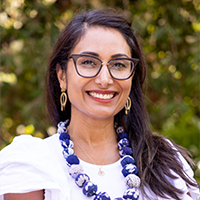
Drawing on years of ethnographic research with on-demand workers, Dubal shows how these opaque systems are reshaping the nature of work — undermining economic stability, limiting mobility, and raising urgent questions about fairness in the digital economy. Her work highlights how techniques once used to tailor prices for consumers are now being applied to wages, often in ways that conflict with long-standing principles like equal pay for equal work. This talk will explore what these changes mean for workers, how they challenge existing labor protections, and what legal responses may be needed.
Veena Dubal is a professor of law at the University of California, Irvine School of Law. Her research focuses broadly on law, technology, and precarious workers, combining legal and empirical analysis to explore issues of labor and inequality.
The Technological Grotesque: The Rise, Fall, and Future of Tech's Human Values Workforce
Wednesday, April 15 | 3–4:30 p.m.
Physics 244
What does it mean for an organization to take AI ethics seriously, and what does it mean to perform that seriousness without substantively practicing it?
Drawing on analysis of more than 5,700 job postings and 27 practitioner interviews across five years of research, this talk examines the emergence of the “responsible, ethical, and public interest technology workforce”: the professionals tasked with embedding human values into AI systems.
The data reveals a striking pattern: what Donig calls the precarity experience paradox. Organizations routinely assign their hardest sociotechnical challenges to the least experienced, least structurally powerful workers, often in contract or temporary roles.
Meanwhile, the roles asking normative questions (“what should we do?”) have collapsed as a share of the market, replaced by technically-oriented compliance roles asking only “how do we meet existing requirements?”

Deb Donig teaches in University of California, Berkeley’s School of Information. She is the 2024-26 Siegel Endowed Fellow at All Tech is Human, where her research focuses on the workforce pipeline for ethical, responsible, and public interest technology development. Her new book, “The Technological Grotesque” (forthcoming, MIT Press) examines how technological innovation can be aligned with human values through institutional design and educational reform.
Using AI to Monitor and Analyze Surf Breaks
Wednesday, March 25 | 12:30–1:45 p.m.
Peterson Gym (PG-153)
How can artificial intelligence help protect the waves we rely on for recreation, culture, and coastal economies? This talk demonstrates how Surfline Coastal Intelligence applies machine learning to existing Surfline CCTV infrastructure to enable continuous monitoring of wave quality, surf conditions, and surfer behavior. By linking visual data with metocean drivers, we can quantify a surf amenity and model how surf breaks respond to environmental change.

The presentation, by Paul Ganev of SCI, will include a technical walkthrough of the system and examples of data analysis that support more informed coastal planning and climate adaptation strategies.
Sponsored by SDSU College of Arts and Letters, SDSU Surf/Skate Studies Collaborative, Center for Surf Research, and Surfline Coastal Intelligence.
Surfline Coastal Intelligence (SCI) is Surfline’s enterprise, AI-powered coastal monitoring platform that transforms live coastal camera feeds into structured, actionable data for governments, engineers, and safety agencies. Leveraging Surfline’s global network of 1,200+ cameras and patented computer vision technology, SCI delivers continuous insights on shoreline change, beach attendance, wave dynamics, and related coastal metrics through a secure dashboard. The result is near-real-time operational awareness and long-term, data-driven support for coastal resilience planning, beach safety, and resource management.
The Book Transforms.
Tuesday, March 17 | 2–3:15 p.m.
SDSU Library, Digital Humanities Center (LA 61)
Watch the video from the 3/17 event.
Join SDSU English and Comparative Literature Professor Jessica Pressman and Amaranth Borsuk in a talk that asks you to think strategically about the history and future of literature and language, the book and digital platforms for poetics.

Borsuk is a scholar, poet, and digital artist. She is author of “The Book” (MIT Press, 2018), an introduction to the book as object, content, idea, and interface. Her books of poetry include “Pomegranate Eater “(Kore Press, 2016), “Handiwork” (Slope Editions, 2012), selected by Paul Hoover for the 2011 Slope Editions Poetry Prize; and “Tonal Saw” (The Song Cave, 2010), a chapbook-length erasure.
Borsuk is associate professor in the School of Interdisciplinary Arts and Sciences at the University of Washington, Bothell, where she also serves as associate director of the MFA in Creative Writing and Poetics.
Presented by the College of Arts and Letters HŪMTECH initiative, the Department of English and Comparative Literature, the Digital Humanities initiative, and the Hugh C. Hyde Living Writers' Series.
Building the World’s First AI-Generated Genome, a Q&A with Brian Hie
Monday, March 16 | 4–5 p.m.
SDSU Library, Digital Humanities Center (LA 61)
Watch the video from the 3/16 event.
Join us for a university-wide conversation with Brian Hie, Stanford professor and lead of the Evo project, whose work sits at the frontier of artificial intelligence and biology. Hie has developed an AI system capable of generating entirely novel genetic sequences — opening new possibilities for medicine and our understanding of life itself.
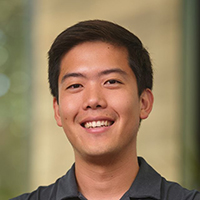
Designed for faculty and students across all disciplines, this audience Q&A will invite wide-ranging discussion about the promises, risks, and responsibilities of AI-driven biotechnology. Bring your questions and your perspective to what promises to be a thought-provoking, cross-disciplinary exchange.
Hie is an assistant professor of chemical engineering at Stanford University, the Dieter Schwarz Foundation Stanford Data Science Faculty Fellow, and an Innovation Investigator at Arc Institute, where his group conducts research at the intersection of biology and AI.
Powering AI from the Borderlands: Organizing Against Data Centers
Tuesday, Feb. 24 | 4 p.m.
SDSU Library, Digital Humanities Center (LA 61)
Watch the video from the 2/24 event.
In this roundtable discussion, community advocates from two borderland regions of the Southwest U.S.— Doña Ana County, New Mexico and Imperial County, California — will detail their experiences organizing against the development of AI data centers. At a time when industry leaders are claiming AI will transform every aspect of social, political, and economic life, this dialogue emphasizes the importance of community knowledge and lived experience in countering the promises made by the AI industry.
 Annie Ersinghaus is an award-winning independent filmmaker from Las Cruces, New Mexico. She enjoys the art of storytelling and finds passion in documentary filmmaking, especially when it involves environmental issues in the West. Her most recent film, “The Land of Sacrifice: The Burden of Oil and Gas Extraction,” has been screened across the state of New Mexico and was featured in the Durango Independent Film Festival and the Las Cruces International Film Festival.
 Daisy A. Maldonado,is a community advocate for environmental justice, public health, and climate preservation in southern New Mexico. She works alongside New Mexico’s colonia communities that have long faced unsafe infrastructure, lack of healthcare access and limited political power. Her advocacy focuses on clean water, air quality, infrastructure equity, and ensuring communities most impacted by oppressive systems have a meaningful voice in decision-making. Under her leadership, residents have organized to expand access to arsenic water testing, improve transportation safety, advance public health education, and challenge processes that limit public participation in land-use and development decisions. Her work has been recognized by the Center for Disease Control and Muslim Advocates and featured in regional media, including KRWG and Las Cruces Community Radio.
 Gilberto Manzanarez, is a community advocate and educator from Calexico, California, focused on environmental justice and government transparency in the Imperial Valley. As the founding member of Valle Imperial Resiste, he has helped organize residents around issues of water, air quality, and the local impacts of large-scale industrial projects. His work centers on translating complex public policy into accessible information through multimedia storytelling, public education, and civic engagement. Manzanarez is part of a resident-led coalition raising concerns about proposed data center developments in the Imperial Valley and their potential impacts on energy use, water resources, and community accountability.
The roundtable dialogue will be facilitated by Dustin Edwards, associate professor of rhetoric and writing studies, director of the SDSU Writing Center, and author of “Enduring Digital Damage: Rhetorical Reckonings for Planetary Survival.”
Getting into tech without a STEM degree
Wednesday, Jan. 28 | 2 p.m.
Career Services (SSE 1200), Career Resource Room
Join us for a panel discussion featuring professionals from the tech industry with diverse educational backgrounds. Panelists will share how they pursued careers in technology both with and without traditional tech degrees, highlighting alternative pathways, transferable skills, and practical advice for breaking into the industry. Open to all undergraduate students — come ask questions and get inspired!
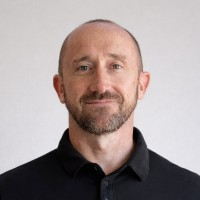 Zach Lawryk leads the Global Solutions Engineering team at OpenAI. He has built and scaled technical sales organizations at Salesforce, Optimizely, Slack, and Rippling, and now helps executives develop and execute practical AI strategies. He is an alumnus of the Political Science program in the College of Arts and Letters at SDSU.
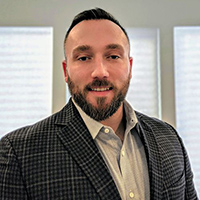 Keelan Schule is a Strategic Solutions Engineer at OpenAI specializing in large-scale AI deployments for higher education and public institutions, holding a degree in Bioinformatics from the University of Saskatchewan. With a background in enterprise security and systems integration, he helps universities operationalize AI across curriculum, student services, and campus infrastructure.
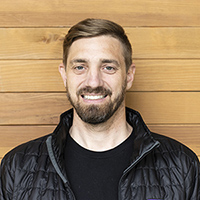 John Faris is President at marketing agency Red Door Interactive, where he leads cross-disciplinary teams across brand, performance marketing, analytics, and technology. A proud alumnus with both undergraduate and graduate business degrees from SDSU, he brings over two decades of experience navigating major marketing technology shifts from search and social to mobile and today’s AI-driven landscape. His work focuses on helping organizations adapt and drive measurable business impact.
Science + Humanities: Entanglement in the Age of AI
A conversation with N. Katherine Hayles
Join us for the kickoff College of Arts and Letters HŪMTECH event.
Leading scholar of digital media and culture, N. Katherine Hayles, launches her latest book at SDSU. Lecture includes discussion with Rita Raley, Q&A, and book signing.
Monday, March 24, 2025
4:30 p.m.
at the Digital Humanities Center, SDSU University Library
 N. Katherine Hayles is the Distinguished Research Professor at the University of California, Los Angeles, and the James B. Duke Professor Emerita from Duke University. Hayles is the author of 12 books and more than 100 articles on humanity, culture, and technology.
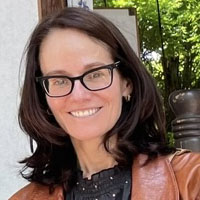 Rita Raley is a professor of English with courtesy appointments in film and media studies, comparative literature, and global studies at UC Santa Barbara. She is a leading thinker on AI/machine learning and generative AI from a humanities perspective.
Presented by the College of Arts and Letters HŪMTECH initiative and the Digital Humanities initiative.